Extraordinary innovation in gastronomy at Pipa beach.
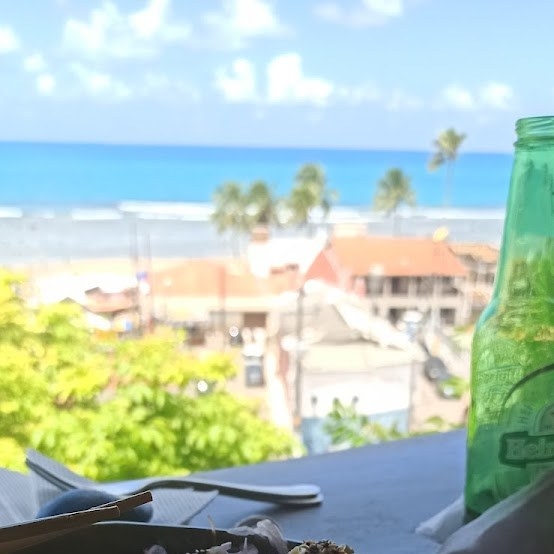
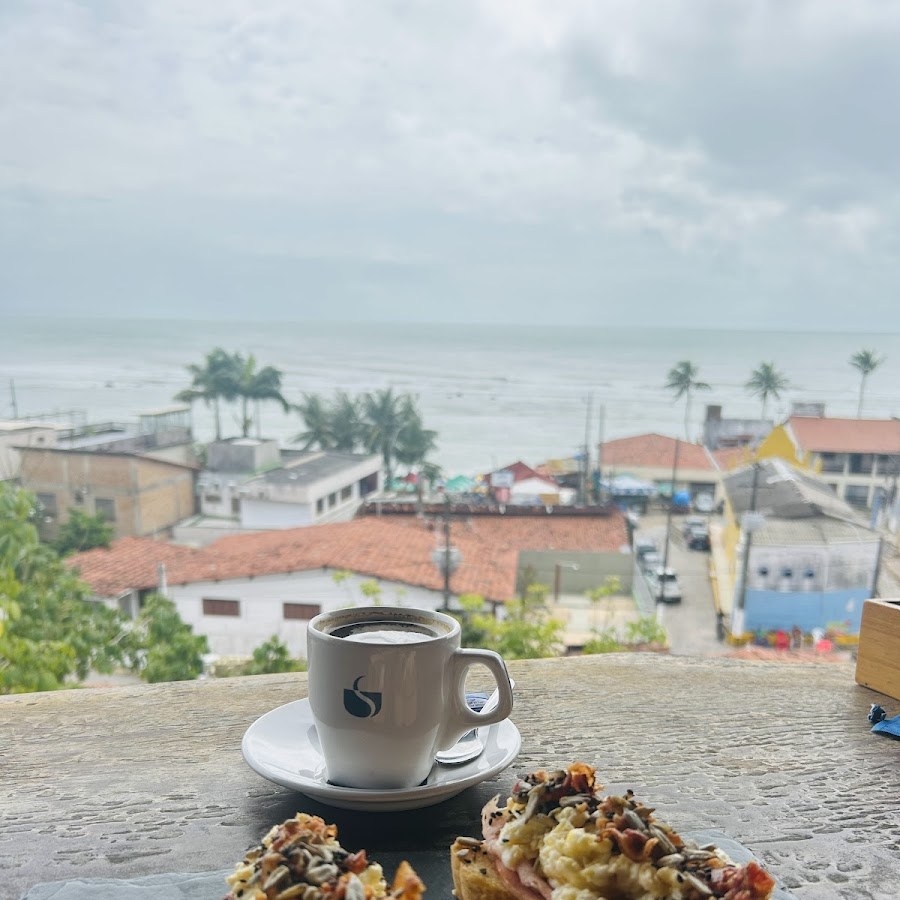
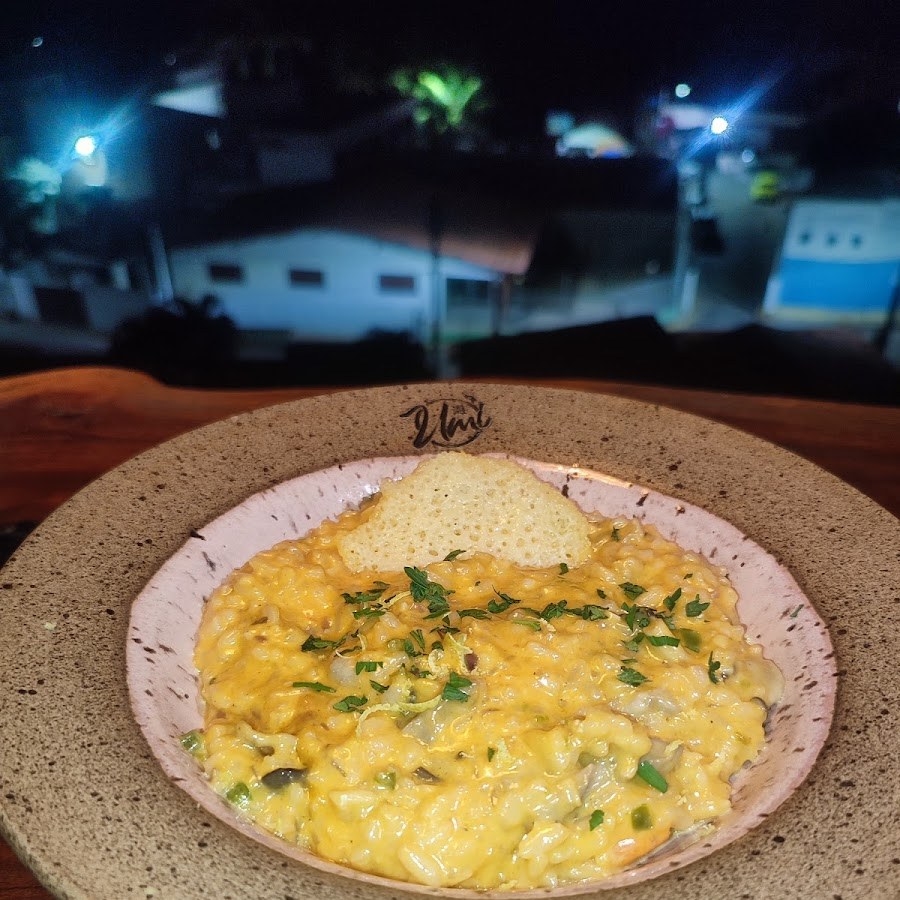
On Avenida Baía dos Golfinhos, along the stretch that climbs towards the lookout, there is a raised terrace with one continuous wooden counter running all the way around the room. From that rail you see the tiled roofs of central Pipa and, behind them, the open sea with coconut palms in the foreground. This is UMI Fun Kitchen, and the menu that reaches that counter is built on raw fish: poke, ceviche, tartare and tiradito, served from half past seven in the morning until after midnight.
The rail seats are few: message them on WhatsApp and ask about one at the terrace rail before you walk up.
| What it is | Japanese kitchen with its own bar |
|---|---|
| Where | Av. Baía dos Golfinhos, 965, Praia da Pipa |
| Hours | Every day: breakfast 07:30–11:30, lunch 11:30–16:30, dinner 16:30–00:30 |
| Bookings | Yes, accepted |
| How you eat | Dining room and outdoor tables |
| Diet | Vegan and vegetarian options declared |
| With kids | High chairs available |
| With a dog | Allowed |
| Parking | Free on the street; spaces are hard to find |
The house menu is written in blocks and reads fast. Raw fish is the spine, and everything else is built around it.
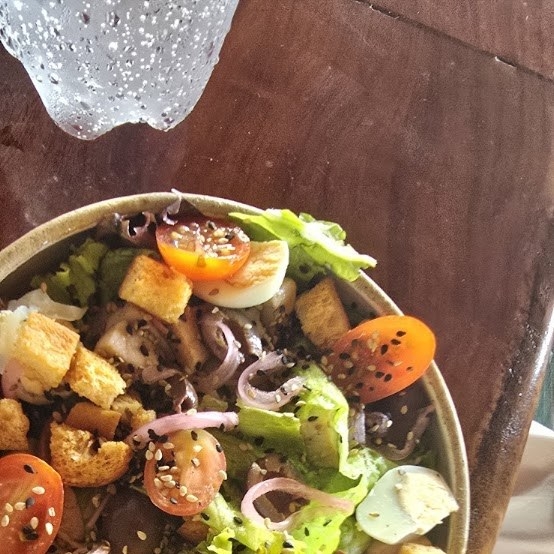
It is a Hawaiian salad over a base of rice, leaves or both mixed, carrying broccoli, cherry tomato, carrot, red onion, red cabbage, sunomono, mango, cream cheese and spring onion, with a mix of sesame and almonds on top. It comes in four builds: vegan or vegetarian, salmon, tuna and shrimp. It is the dish the house puts up front and the one that works best in the middle of the day.
This is where the kitchen lives. The tuna tartare is tuna and peanut, chopped and marinated in shoyu and olive oil, over guacamole with sweet potato chips. The salmon tartare is built on diced avocado and mango with wasabi cream cheese and chopped salmon. The salmon or tuna tiradito is six sashimi cuts with sour cream and an emulsion of shoyu, oil, sesame and spring onion.
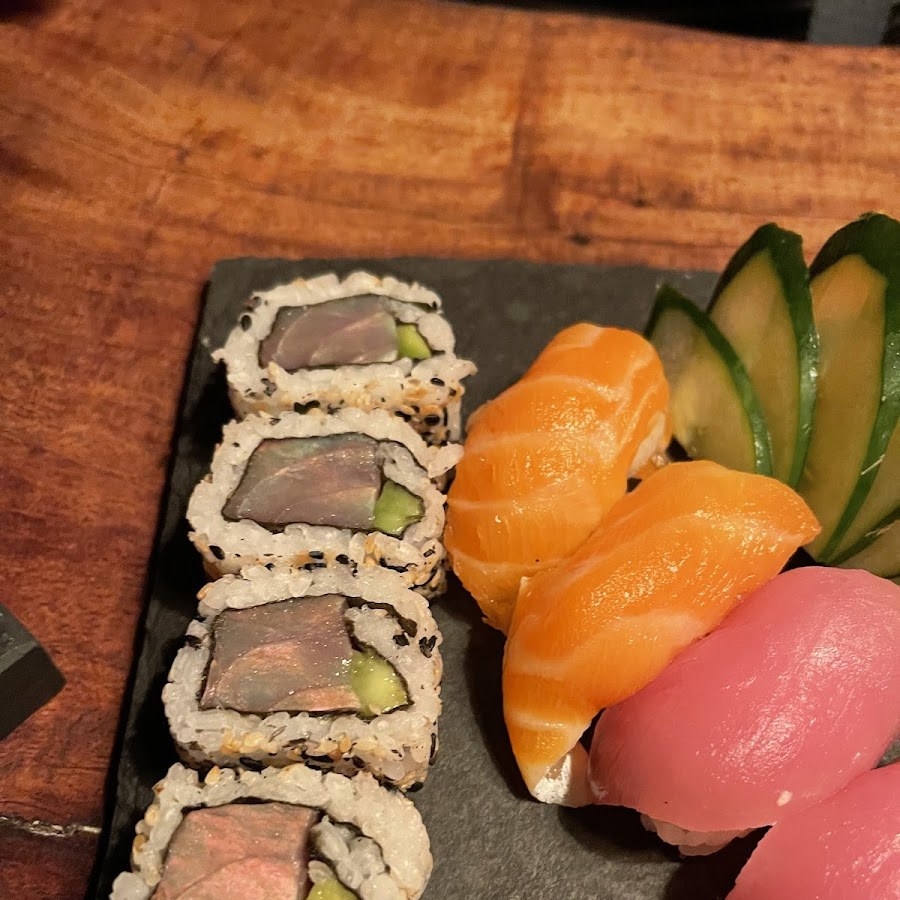
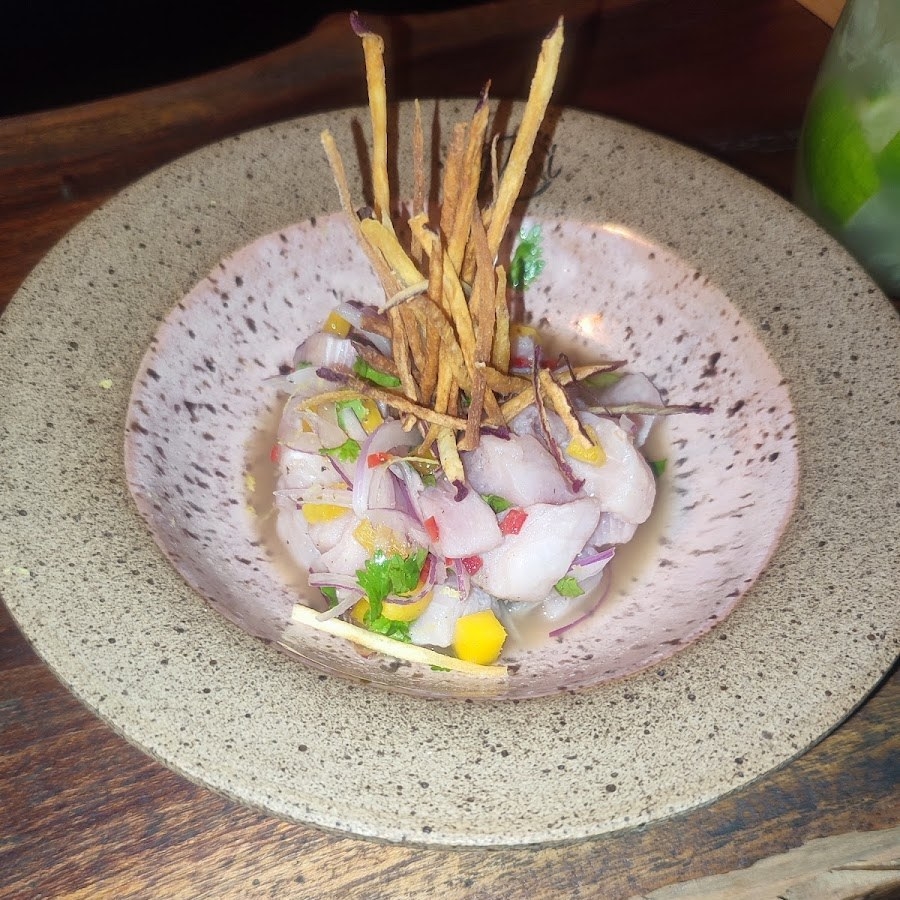
There are two ceviches. The white fish one comes with leche de tigre and red onion, mango, dedo-de-moça chilli, coriander, parsley, yellow pepper and shoestring potato. The salmon one repeats the leche de tigre and adds green apple. Then come three rolls wrapped in rice paper: the Vietnamese with sautéed shrimp, the salmon primavera, and the vegan one with sautéed shimeji, cucumber, avocado and Sicilian lemon zest.
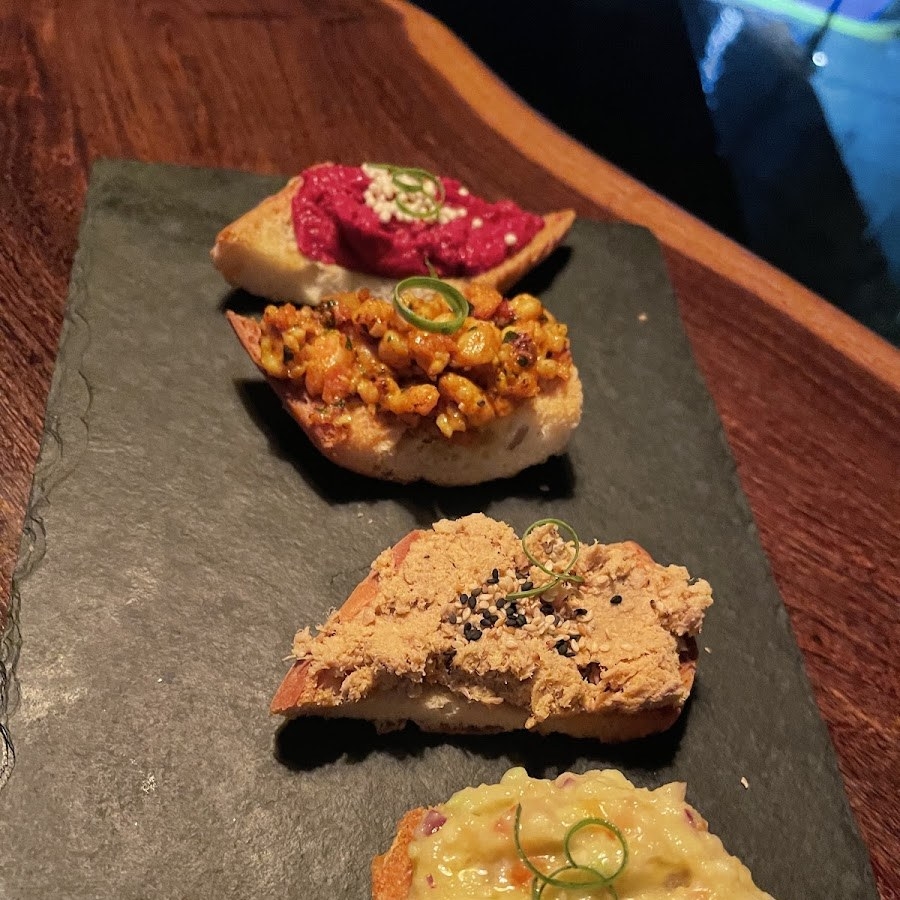
There are four salads: sautéed tuna with hondashi, croutons and avocado mayonnaise; the Nami, with mango, avocado and shaved parmesan; the same Nami with shrimp; and an octopus salad with potato, olives, paprika and Modena vinegar. Among the snacks are guacamole with sweet potato chips, bruschetta in four flavours, beetroot hummus with pita bread and falafel, and pork gyoza with shoyu.
Three main plates follow: the Umi, grilled white fish with a sesame crust and tare sauce with sautéed vegetables; the creamy salmon, with peanut crumble over potato purée and broccoli; and the tuna wok with rice and vegetables tossed in shoyu, chilli, garlic and ginger. There are also three chapata sandwiches — vegan with a chickpea patty, fresh salmon, and tuna escabeche — and to close, lemon tart, brownie with vanilla ice cream, and a plate of seasonal fruit.
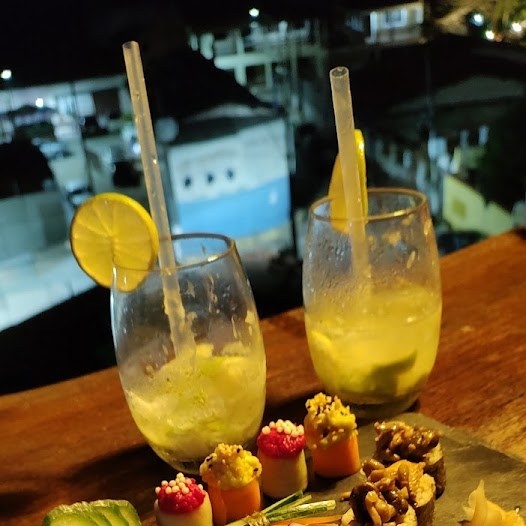
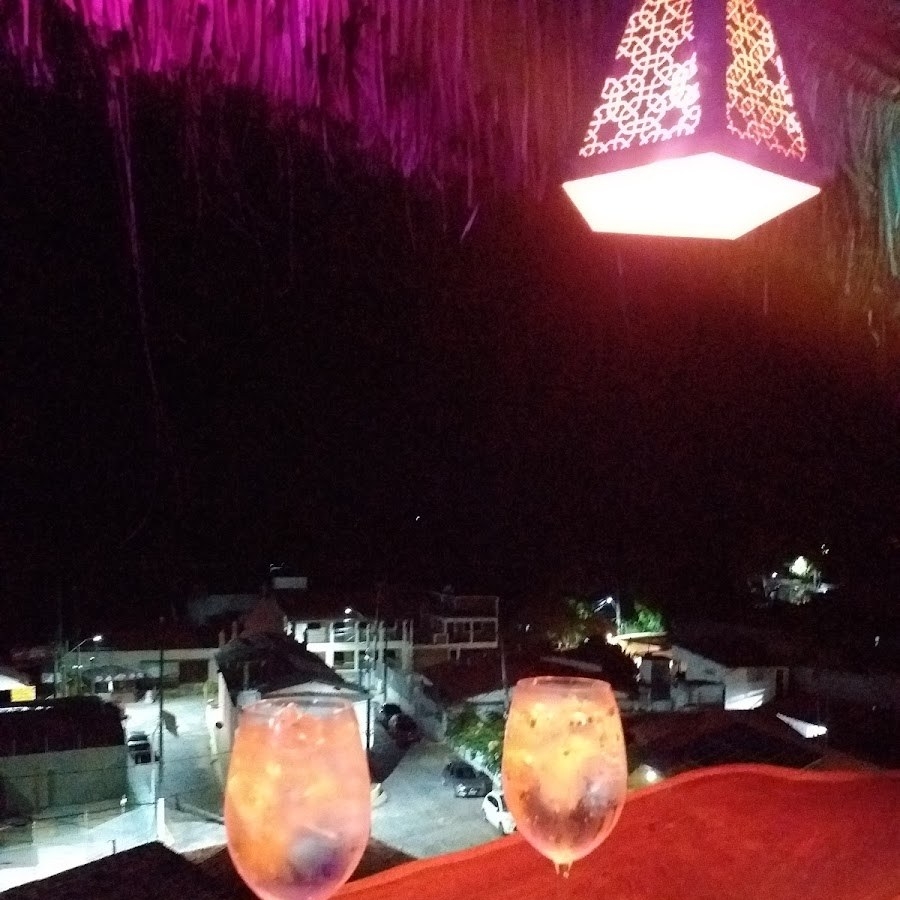
There is a bar on site, and the menu shows it: cocktails, wine, beer and spirits, plus coffee. The photos show tall drinks on the wooden counter and wine glasses with the view behind them. At midday the drinks list runs cold; at night the bar takes over, since service continues past midnight and the listing records late-night food.
Coffee is declared too, which makes sense: service starts at half past seven in the morning, so the first stretch of the day is breakfast with a view, with the terrace still empty.
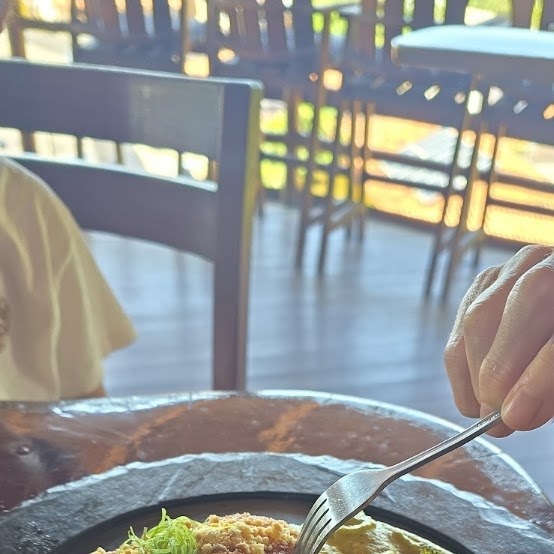
The shape of the place is what defines it. A continuous wooden counter runs along the rail and wraps the whole room, so most of the seats face outward instead of inward. By day the light comes in flat and you get the roofs, the palms and the sea; by night the terrace lights up with designed lamps and a pink wash, and the lights of the centre sit below.
The listing describes it as cosy, casual, romantic, trendy and quiet, an unusual combination that explains why it works equally for a dinner for two and for a table of six. It also records family-friendly, groups, tourists, a safe space for transgender people, and a business that welcomes the LGBTQ+ community. The house identifies as a women-led business. There is a toilet and a bar on site, and service is split between the counter and table service.
It opens seven days a week, with no closing day. The house menu splits the day into three: breakfast 07:30 to 11:30, lunch 11:30 to 16:30 and dinner 16:30 to 00:30. Service never stops between morning and the small hours, which is rare in Pipa and turns this place into the answer for an awkward hour.
Each stretch has its reason. Early on, the terrace is cool and empty, and breakfast with the sea in view comes without competition. At midday the poke rules: fast, cold and light before heading down to the sand. Late afternoon is the window everyone asks for, because the terrace faces the western side of the centre and the light shifts across the rooftops. And the night belongs to the bar: cocktails, plates to share and a kitchen open past midnight.
Since the rail seats are the ones everyone wants, say so in advance. The house takes bookings, and for a weekend sunset that is how you secure the spot.
It stands on Avenida Baía dos Golfinhos, at number 965, on the stretch rising from the centre towards the lookout. It is a few minutes on foot from anywhere in central Pipa, and the landmark is simple: walk up the avenue until the village drops below you and the sea appears above the roofs.
From there, the sand at Praia da Pipa is a short walk downhill, so it fits either side of a beach day. Arriving from Natal or the airport, the transfers to Pipa drop you in the centre, a few blocks away.
On driving, the house listing is blunt: street parking is free, and spaces are hard to find. In high season, walking up is the easier call.
The listing declares high chairs, so the terrace works with babies and small children. It also states that dogs are allowed. On accessibility the listing is explicit on two counts: the entrance is wheelchair accessible and so is the seating, which is the detail that actually decides whether a meal is comfortable. Payment is by credit card, debit card and contactless.
Anyone eating light before the beach. A cold poke at midday and a short walk down to the sand is a plan that builds itself.
Dinner for two. The listing declares a romantic room and the rail seats face the sea; with a booking, late afternoon is the window.
Anyone eating without meat. There is vegan or vegetarian poke, a vegan roll, a chickpea-patty sandwich, hummus with falafel and guacamole: a full meal without leaving the menu.
Yes. The house menu says so outright: open every day, with no closing day.
It opens at 07:30 with breakfast and the kitchen runs until 00:30.
The house takes bookings. For late afternoon and for the terrace rail seats, booking is the sensible move.
Yes, and they are on the menu: vegan or vegetarian poke, a vegan roll, a chickpea-patty sandwich and beetroot hummus with falafel.
Yes. The listing declares high chairs and a family-friendly room.
Yes, dogs are declared as allowed.
Yes: the listing declares an accessible entrance and accessible seating.
Street parking is free, and the listing itself warns that spaces are hard to find. In high season, arriving on foot is easier.
If you want a rail seat as the sun drops, message them on WhatsApp and book for sunset: that is the stretch when the terrace fills up first.



 ESPAÑOL
 PORTUGUES
